
 Base Services Hub Agency
What the CLARITY Act Means for Crypto Builders
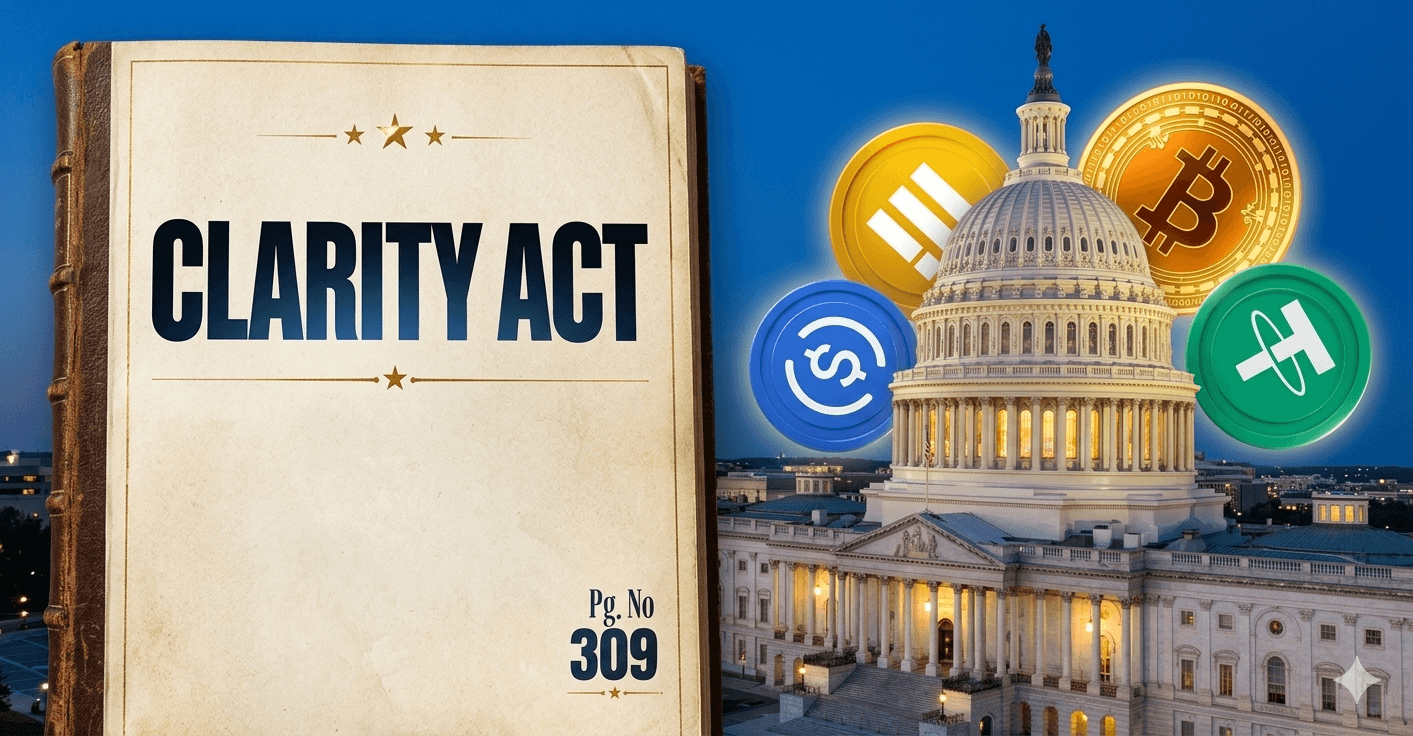
The CLARITY Act would split US crypto oversight between the SEC and CFTC, end regulation-by-enforcement, and open a real path for compliant US token launches. Here is what it actually changes for builders.
TL;DR
- The CLARITY Act splits crypto oversight between the SEC and the CFTC, with the CFTC taking digital commodities and spot markets.
- Tokens from sufficiently decentralised chains get classified as digital commodities, not securities, ending years of jurisdictional limbo.
- Non-custodial DeFi developers, wallet providers, and validators are explicitly carved out from broker-dealer status.
- The bill creates a real path for compliant US token launches, onshore exchange listings, and US users accessing protocols without geofencing.
- It is not a free pass. Disclosure, custody, and registration rules apply, and bad actors lose the "regulatory ambiguity" defence.
For five years, building onchain in the US has meant guessing. Guessing whether your token was a security, whether your exchange listing would survive enforcement, whether your protocol would get a Wells notice for shipping open-source code.
The Digital Asset Market Clarity Act, known as the CLARITY Act, is the first serious attempt to end that. It passed the House with bipartisan support and is working its way through the Senate.
If it lands, the rules of the game change for everyone shipping in this space.
What the CLARITY Act Actually Does
Quick Recap: The bill draws a clear line between digital commodities and digital securities, and assigns each to a different regulator.
The core move is splitting jurisdiction. The SEC keeps authority over digital asset securities, meaning investment contracts and fundraising instruments. The CFTC gets digital commodities and the spot markets where they trade.
This sounds simple, but it ends years of regulator turf wars. Before CLARITY, the SEC and CFTC both claimed jurisdiction over the same tokens, often in contradictory ways.
The bill also introduces a "mature blockchain system" test. Once a chain hits sufficient decentralisation, its native token is treated as a commodity, not a security.
That gives builders a defined finish line. Ship the chain, decentralise it, and you exit securities classification.
Why This Matters for Token Launches
Quick Recap: A compliant US token launch becomes possible without legal acrobatics.
Right now, most serious token launches either avoid US users entirely or route through offshore foundations with elaborate legal structures. Both add cost and friction without solving the underlying problem.
CLARITY creates a registration and disclosure framework specifically designed for digital assets. Token issuers can register, disclose, and sell to US persons without contorting their corporate structure.
This is not lighter regulation. It is appropriate regulation. The disclosure requirements borrow from securities law but get tailored to how tokens actually work, including supply schedules, vesting, and protocol governance rights.
For teams we work with on token launches, this changes the planning. You no longer have to choose between US access and legal sanity.
DeFi and the Non-Custodial Carve-Out
Quick Recap: Writing open-source protocol code stops being a regulatory liability.
The bill explicitly protects developers of non-custodial protocols. If you do not hold user funds, you are not a broker-dealer. If you publish code and step away, you are not running an exchange.
This is the part that builders have wanted for years. Tornado Cash sanctions, the SEC's actions against Uniswap Labs, and the constant threat of enforcement against open-source developers have pushed real engineering talent offshore.
CLARITY does not legalise every DeFi protocol. Fraud, market manipulation, and money laundering remain illegal under existing law. The SEC and DOJ keep anti-fraud authority even over commodities.
What changes is that shipping non-custodial code is no longer itself a crime. That distinction matters enormously for anyone building lending markets, DEXes, or onchain games with economic primitives.
What Changes for Exchanges and Custody
Quick Recap: US exchanges get a real licensing path, and custody rules finally make sense.
Centralised exchanges have been operating in a grey zone for a decade. Coinbase, Kraken, and others have fought enforcement actions while trying to list new assets responsibly.
Under CLARITY, exchanges register with the CFTC for digital commodity trading. They keep SEC oversight for any tokenised securities they list. The dual track matches how these platforms actually operate.
Custody gets clearer too. The bill defines what qualified custody looks like for digital assets, including specific rules for staking, lending, and yield-bearing arrangements.
For projects launching tokens, this means listings on compliant US venues become realistic. The current pattern of launching offshore and waiting two years for a US listing should compress significantly.
The Bigger Picture: Pairing with GENIUS
Quick Recap: CLARITY plus the GENIUS Act gives the US a full regulatory stack for digital assets.
The CLARITY Act does not stand alone. The GENIUS Act, signed in July 2025, established a federal framework for stablecoins. Together they cover most of what US crypto markets need.
GENIUS handles dollar-pegged stablecoins, reserves, audits, and issuer requirements. CLARITY handles everything else, the tokens themselves, the markets that trade them, and the protocols that route the activity.
This is the first time the US has had something resembling a coherent crypto policy. It is not perfect, but it is real.
The Risks and Trade-Offs
Quick Recap: Clarity comes with compliance overhead, and the law does not protect bad-faith actors.
CLARITY is not a builder's bill in the sense of removing all friction. Registered token issuers face ongoing disclosure obligations. Exchanges take on compliance programmes that cost real money.
Smaller teams will feel the compliance weight. Hiring securities counsel, running ongoing reporting, and maintaining qualified custody relationships add fixed costs that favour larger operators.
The "mature blockchain system" test will also get contested. What counts as sufficient decentralisation is a legal question that will be litigated for years.
And the bill does not retroactively excuse fraud, manipulation, or vaporware. Teams that raised on lies still face enforcement. The legal ambiguity that some projects hid behind is gone.
What Builders Should Actually Do
Quick Recap: Start preparing your token structure, disclosure materials, and audit posture now.
If CLARITY passes the Senate in something close to its current form, the teams that move first will win. The work to prepare is not glamorous, but it is concrete.
- Get your tokenomics, vesting schedules, and treasury structure documented in disclosure-ready form.
- Audit your contracts properly. Compliant launches will require evidence of security review, not vibes. We do this kind of work as part of our smart contract audit practice.
- Decide on your custody story before you need one. Self-custody is fine, but if you hold user funds you need a real plan.
- Pick your venue strategy. US-onshore listings are coming back, and the projects with clean compliance posture will get them first.
Teams that built on Base with real users and real volume are already positioned well. The pattern of treating compliance as a first-class engineering concern, not a last-minute legal patch, is what survives this transition.
Closing Thoughts
The CLARITY Act is not the bill some maximalists wanted. It does not get the government out of crypto, and it imposes real costs on builders.
What it does is end the era of regulation-by-enforcement, where the rules were written in retrospect through lawsuits. For anyone trying to build a serious onchain business in the US, that alone is worth it.
Building a token, exchange, or DeFi protocol and want to get your compliance posture right from day one? Ethereal Labs helps teams design and ship onchain systems that hold up under both technical and regulatory scrutiny.